
Decorative Finishes That Mimic Premium Materials
Stamped Concrete in Cincinnati for homeowners seeking the appearance of natural stone or brick without the maintenance requirements
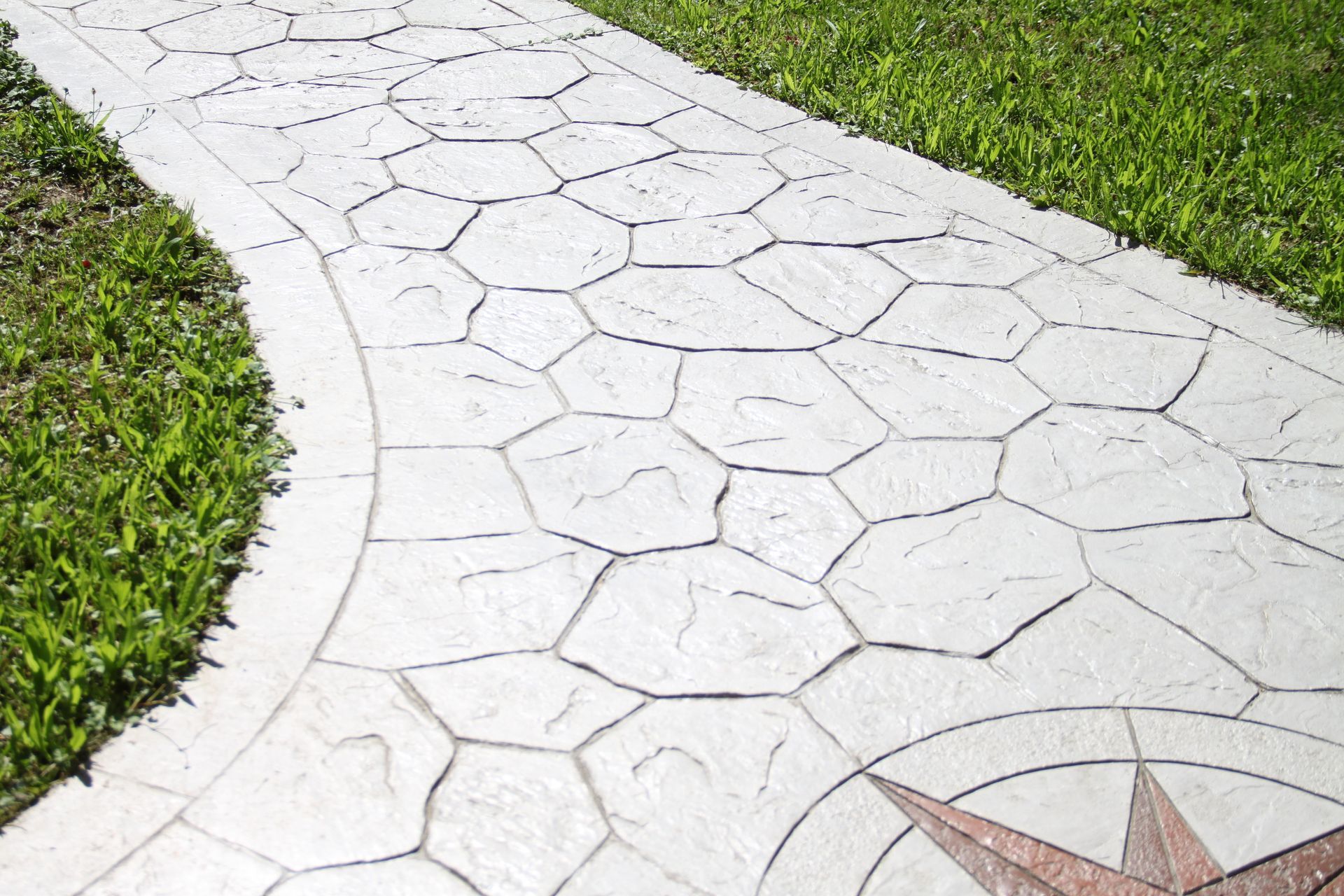
Stamped concrete replicates the texture and pattern of slate, flagstone, brick, cobblestone, and other premium materials by pressing textured mats into freshly poured concrete before it fully sets. Queen City Concrete installs stamped patios, walkways, and entryways that combine decorative detail with the durability of a monolithic slab, offering an alternative to natural stone that costs less and requires minimal long-term maintenance. Homeowners throughout Greater Cincinnati choose this option when they want visual interest that complements their home's exterior without the settling, weed growth, or individual unit replacement that comes with segmented pavers.
The process begins with the same site preparation used for standard concrete work—excavation, grading, base compaction, and reinforcement placement. Once the concrete is poured and leveled, color hardeners or integral pigments are applied, and textured mats are pressed into the surface to create the desired pattern. Release agents prevent the mats from bonding to the concrete, and once the mats are removed, the pattern remains embedded in the slab. A sealer is applied after curing to protect the color and surface from weather exposure and staining.
Request a consultation to review pattern and color options that match your home's architectural style and outdoor design preferences.
Why Pattern Placement and Timing Matter
Stamping must occur during a narrow window after the concrete is placed but before it hardens beyond the point where mats can imprint cleanly. The timing depends on air temperature, humidity, and the specific mix design used, and experienced crews monitor the surface to determine the exact moment when stamping produces sharp detail without disturbing the slab's structural integrity. Mats are aligned carefully to maintain consistent pattern flow across the entire surface.
Once complete, you'll have a surface that displays the texture and visual detail of natural stone or brick while remaining a single, continuous slab that doesn't settle unevenly or develop gaps between individual units. The color remains consistent across the installation because it was integrated into the concrete or applied as a hardener that bonds with the surface, and the sealer provides protection against staining from leaves, oil, or other common outdoor contaminants. Maintenance involves periodic resealing rather than replacing individual stones or re-leveling sunken pavers.
Pattern options range from random stone layouts that mimic natural flagstone to uniform brick or tile patterns that create more formal, geometric designs. Color choices can replicate the gray tones of slate, the warm hues of sandstone, or the varied shades found in natural fieldstone, and multiple colors can be blended to add depth and realism to the finished surface.
What to Know About Stamped Concrete Installation
Stamped concrete combines decorative finishing with the structural requirements of a durable outdoor slab, and these questions cover the technical and aesthetic considerations that define how these projects are completed.
How does stamped concrete differ from traditional pavers?
Stamped concrete is a continuous slab with patterns pressed into the surface, while pavers are individual units placed on a sand base, meaning stamped concrete avoids the settling, weed growth, and individual unit replacement that segmented pavers require over time.
What happens if stamped concrete cracks?
Cracks can occur due to settling, freeze-thaw cycles, or inadequate base preparation, and while they may interrupt the pattern visually, they can often be repaired by routing and sealing the crack, though the repair line may remain visible depending on the pattern and color.
How are colors applied to stamped concrete?
Color can be mixed directly into the concrete before pouring, applied as a dry-shake hardener to the surface after leveling, or added with acid or water-based stains after the slab cures, with hardeners providing the most consistent and durable color retention.
When should stamped concrete be resealed?
Sealers protect against moisture penetration, staining, and UV fading, and most stamped surfaces benefit from resealing every two to four years depending on traffic levels, sun exposure, and the type of sealer originally applied.
What patterns work best for patios versus walkways?
Larger, random stone patterns suit expansive patios where the full design is visible, while smaller, more uniform patterns such as brick or cobblestone work better for narrow walkways where repeating units maintain visual consistency.
Queen City Concrete customizes stamped concrete installations to match your aesthetic goals while maintaining the structural standards required for outdoor durability in Cincinnati's climate. Arrange a project consultation to explore pattern, color, and layout options suited to your property's design and intended use.