
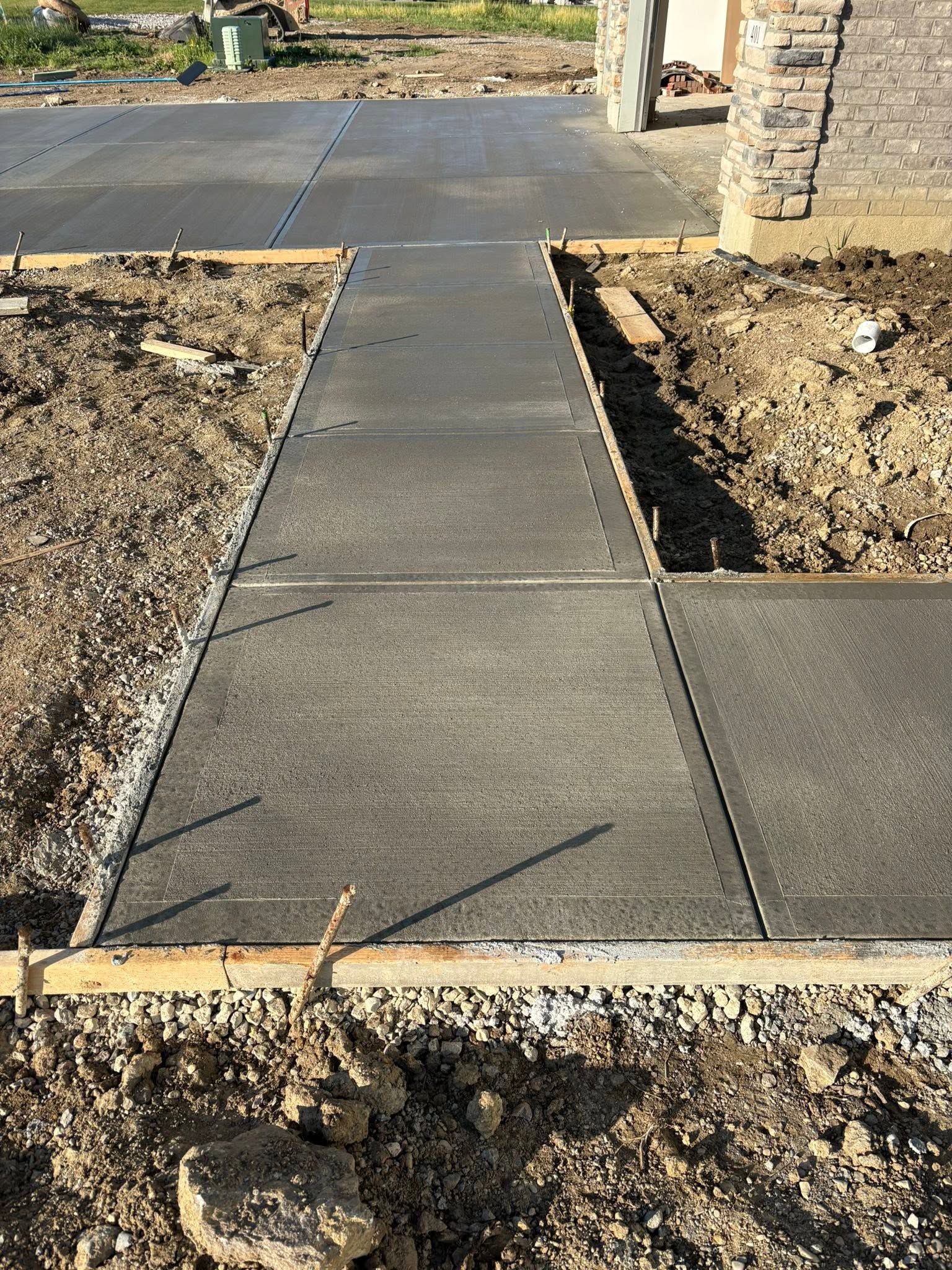
Walkways That Eliminate Tripping Hazards
Concrete Sidewalks in Cincinnati for uneven, cracked paths that create accessibility and safety concerns
Sidewalks that have cracked, settled, or heaved due to tree roots or soil movement create tripping hazards and detract from a property's curb appeal. Queen City Concrete replaces deteriorated walkways with professionally finished concrete that provides level, safe passage from driveways to front entrances, along side yards, or through landscaped areas. These installations address properties where existing sidewalks have become so uneven that patching no longer restores a smooth walking surface.
Replacement begins with removing the damaged sections, correcting the grade to prevent water from pooling, and installing a compacted base that resists future settling. The new concrete is poured, leveled, and finished with control joints placed at intervals that manage cracking as the slab cures and adjusts to temperature changes. Proper grading ensures that rainwater drains away from walkways and foundations rather than collecting in low spots.
Request an estimate to evaluate your current sidewalk condition and determine the replacement scope needed for safe, level access.
Why Grading and Base Stability Matter
Sidewalk durability depends on stable support beneath the concrete and proper water management around it. The base is compacted to resist shifting under foot traffic and seasonal freeze-thaw cycles, while grading directs water away from the slab to prevent erosion and frost heave. Sidewalks installed without attention to these details often settle unevenly within a few years.
Once the new sidewalk is in place, you'll notice a level walking surface without the raised edges or sunken sections that caused stumbles, improved drainage that eliminates puddles after rainstorms, and a uniform appearance that enhances your property's front yard or side access areas. The slab remains stable through seasonal changes because the underlying base was prepared to handle expansion and contraction without transferring stress into visible cracks.
Control joints are cut or tooled into the surface at measured intervals to guide where minor cracking occurs as the concrete cures. These joints prevent random cracks from forming across the walkway and help maintain the structural integrity of each section. The placement and depth of control joints are calculated based on slab width and expected environmental conditions.
Common Sidewalk Replacement Questions
Residential sidewalk projects in Greater Cincinnati involve specific decisions about grading, drainage, and base preparation, and these questions reflect the considerations that affect how walkways are built and how long they last.
What causes sidewalks to become uneven over time?
Soil erosion, tree root growth, freeze-thaw cycles, and inadequate base preparation all contribute to settling or heaving that creates uneven sections and tripping hazards.
How is proper drainage established for a new sidewalk?
The subgrade is graded to slope away from structures, and the base layer is compacted to prevent water from pooling beneath the slab, which reduces the risk of frost heave and erosion during Cincinnati's winter months.
When should a sidewalk be replaced instead of leveled?
Replacement is the better option when cracks are extensive, when multiple sections have settled unevenly, or when surface deterioration has progressed to the point where structural integrity is compromised.
What finish options are available for residential sidewalks?
Broom-finished surfaces provide slip resistance and work well for functional walkways, while exposed aggregate or lightly stamped finishes add texture and visual interest without sacrificing traction.
How long before a new sidewalk can handle foot traffic?
Light walking is possible within a day or two, but full curing takes several weeks, and heavy loads or concentrated weight should be avoided during this period to prevent surface damage or cracking.
Queen City Concrete evaluates site-specific conditions such as grade, drainage patterns, and existing damage to recommend replacement scopes that restore safe, level access. Contact the team to review your walkway layout and discuss installation options suited to your property's terrain.