Surfaces That Look Different From Every Other Driveway
Decorative Concrete in Cincinnati for residential properties that need personalized outdoor features with lasting construction
Queen City Concrete installs decorative concrete finishes that change how patios, walkways, and entryways present themselves while maintaining the structural integrity required for daily foot traffic and weather exposure. Homeowners throughout the Greater Cincinnati Area use these installations when standard gray concrete doesn't match the architectural style of their property or when outdoor spaces need visual definition. The combination of custom textures, color options, and durable finishing methods produces surfaces that handle seasonal freeze-thaw cycles without sacrificing appearance.
The process involves selecting textures that replicate stone, slate, brick, or other patterns, then applying integral color or stains that penetrate the concrete surface rather than sitting on top where they can chip or fade quickly. Each installation follows the same base preparation and reinforcement standards required for structural concrete, which means the decorative layer performs as a functional surface rather than a cosmetic coating that separates over time.
Schedule a free consultation to review texture samples, color options, and layout designs specific to your outdoor space.
What Decorative Concrete Provides Beyond Standard Gray
Decorative finishes integrate color and texture directly into the concrete during installation, which prevents the surface deterioration common with thin coatings or overlays. The stamping process occurs while the concrete remains workable, creating depth and definition that mimics natural materials without the irregular settling or joint failure those materials experience. Sealed surfaces resist staining from leaves, oil, and other contaminants that discolor untreated concrete over time.
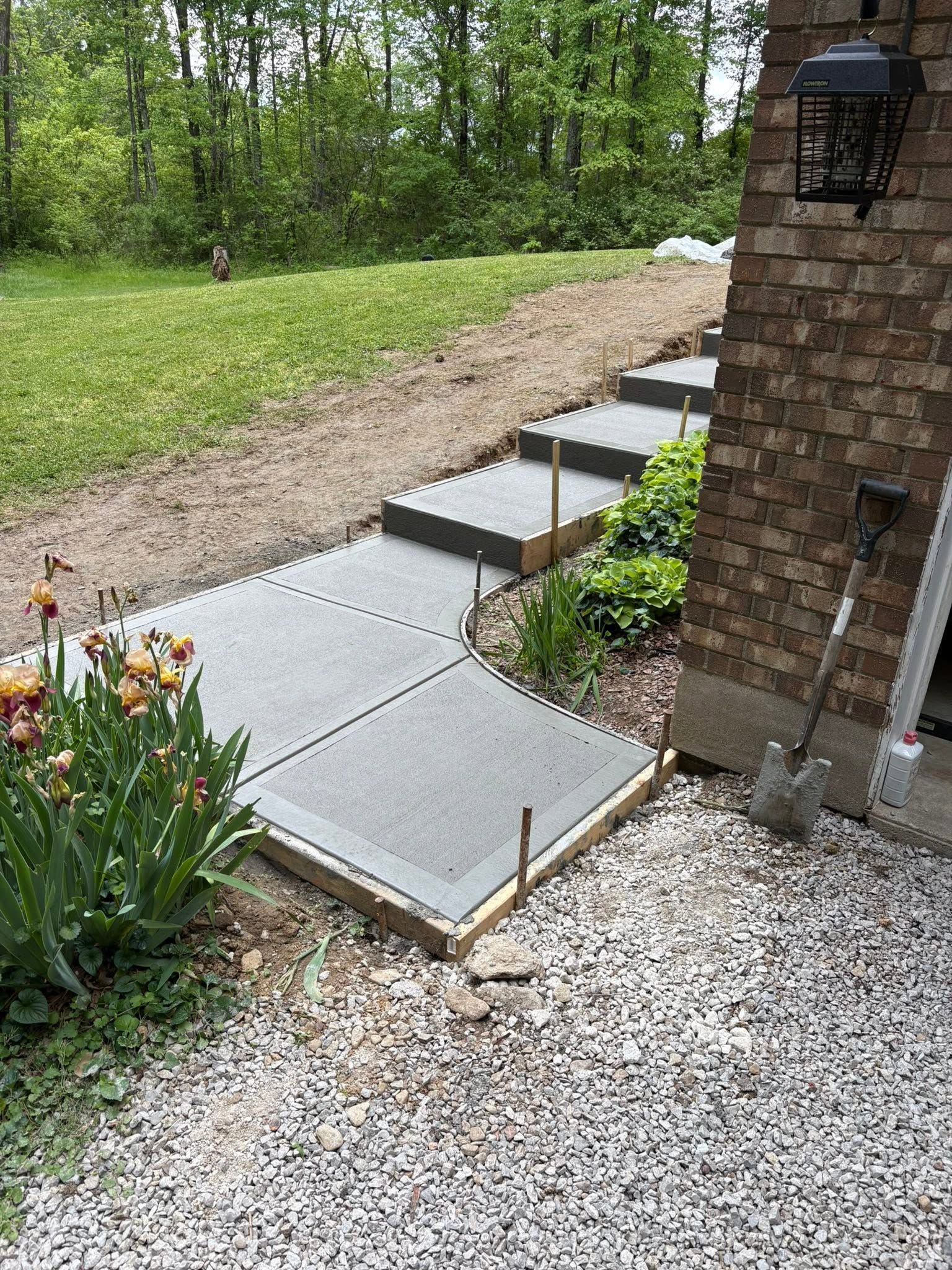
After completion, you see defined patterns with consistent color variation that distinguishes the walkway or patio from surrounding concrete. The texture provides slip resistance in wet conditions, and the sealed finish sheds water instead of absorbing it, which reduces freeze damage during Cincinnati winters. Maintenance involves periodic resealing rather than replacing individual pavers or repairing mortar joints that shift with ground movement.
These installations extend curb appeal improvements to functional outdoor spaces, creating visual continuity between the home's exterior and the hardscaping that frames it. The finished surface handles furniture placement, foot traffic, and seasonal weather without the settling or weed growth that interrupts traditional paver installations.
Questions Homeowners Ask Before Starting Decorative Projects
Decorative concrete involves several decisions about pattern, color, and finish that affect both appearance and long-term maintenance requirements.
What textures work best for high-traffic areas like walkways and entryways?
Stamped patterns with moderate relief provide visual interest without creating uneven surfaces that catch snow shovels or cause tripping hazards, while deeper textures suit patios and decorative borders where foot traffic follows less defined paths.
How does color hold up during Greater Cincinnati winters?
Integral color mixed throughout the concrete provides consistent appearance even if surface wear occurs, while acid stains penetrate the surface and react chemically with the concrete to produce variegated tones that don't fade under UV exposure or deicing salt contact.
When should decorative concrete be sealed after installation?
Initial sealing occurs after the concrete fully cures, typically within 28 days, which allows moisture to escape while protecting the surface from staining and water infiltration that accelerates freeze-thaw damage during cold months.
What preparation happens before decorative concrete gets poured?
The site requires excavation to proper depth, compacted aggregate base installation, and grade adjustments that direct water away from structures, which ensures the decorative surface rests on stable support that won't settle unevenly and crack the stamped pattern.
How does decorative concrete compare in cost to natural stone or pavers?
The installation cost sits between standard concrete and natural stone, with lower long-term maintenance expenses since the monolithic surface eliminates joint repair, releveling, and weed control required by segmented paving systems.
Queen City Concrete completes decorative installations using the same structural standards applied to driveways and slabs, which means your patio or walkway performs as a load-bearing surface designed for decades of use. Contact our team to discuss pattern options, review color samples, and receive a free estimate based on your specific outdoor space and design preferences.